
Personalized Care in Calgary Dayhomes
Learn about personalized care in Calgary dayhomes and questions to ask about routines, communication, play, and how a provider responds to your child.
2/5/20244 min read
What personalized care means in a Calgary dayhome
Personalized care in Calgary dayhomes is best judged through the small, everyday decisions a caregiver makes with each child in mind. It is more than a promise on a website. Parents can ask how a provider learns a child's routine, communicates changes, and balances one child's needs with the needs of the whole group. The answers will differ from one dayhome to another, so use this guide as a set of visit questions rather than a description of services every dayhome provides.
Quality also involves a predictable, safe setting, respectful interactions, and clear agreements with families. A warm first impression matters, but it should be supported by specific examples and written policies. The goal is to understand what an ordinary day would actually be like for your child.
1. Start with your child's real routine
Before a visit, write down your child's usual arrival time, rest pattern, meals and snacks, favourite ways to play, and the parts of the day that are hard. You do not need a perfect schedule. This short note helps you ask practical questions: Where would my child rest? What happens when one child needs quiet while others want active play? How are transitions handled when the group is moving from one activity to another?
Ask what information the provider would want from you before the first day. A useful conversation includes what comforts your child, how they show that they need help, and which routines are important at home. If your family has a specific requirement, discuss whether the provider can meet it before you commit.
2. Watch how the caregiver responds
During a visit, notice whether the adult speaks to children at their level, gives them time to answer, and responds calmly when plans change. Observe how the caregiver helps a child join play or move between activities. One brief visit cannot prove what happens every day, but it can give you questions to follow up on. Ask the provider for a recent, non-identifying example of how they adapted an activity for a child's interests or pace.
Personalization does not mean a child always gets one-to-one attention or chooses every activity. A dayhome is a group setting. The question is how the educator makes room for individual interests and needs while keeping the whole group supervised and included.
3. Ask about communication before a problem occurs
Find out how parents receive routine updates and how the provider shares a concern. Is communication at pickup, by message, through a daily note, or another way? Ask when a parent should expect a response and how urgent information is handled. Clear communication makes it easier to notice a change in sleep, eating, mood, or participation and discuss it without blame.
A simple question is: "If my child has a difficult morning, what would you tell me at pickup?" Follow it with: "What would you need from me?" The answer shows how the provider and family might work together. Agree on who may receive updates and who may pick up the child.
4. Look at play, rest and the physical setting
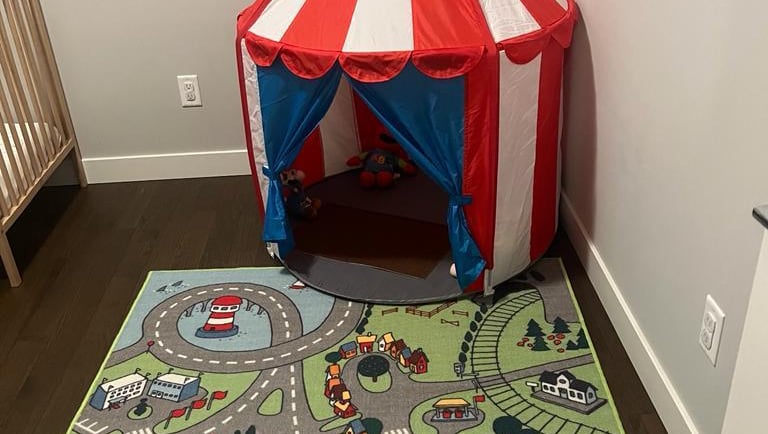
Ask to see where children can move, create, read, rest, and play outdoors. Are materials reachable and appropriate for the group you observed? Is there space for a child who wants a quieter activity? Rather than asking whether a dayhome has a particular educational label, ask what children did yesterday and how the provider chose those activities.
Calgary weather changes the practical details of the day. Ask how the provider plans indoor and outdoor time in different conditions, what families should send, and how plans change when outdoor play is not suitable. Do not assume a particular park trip, outdoor schedule, or meal programme unless the provider confirms it.
5. Check policies, supervision and backup arrangements
Request the written agreement and policies for illness, medication, emergencies, absences, closures, and pickup authorization. Ask who supervises children during meals, rest, and outdoor time, and what happens if the regular educator is away. A provider should be able to explain the plan in terms you understand. Record anything you need to verify later.
In Alberta, a family day home may operate with or without an agreement with a licensed agency. Ask the specific provider about their current status; do not infer it from the words "dayhome" or "childcare" alone. Alberta's approved family day homes and choose quality childcare pages explain the categories and quality questions. This guide does not claim a particular licensing or agency status for Happy Learning Zone.
6. Use the same visit questions for every option
Who will care for my child during a normal day, and who steps in if that person is away?
What would you ask our family before the first day?
How do you adapt play or rest when children have different interests and routines?
How will you tell me about an ordinary day and about a concern?
What are the illness, emergency, closure, and pickup policies?
What is included in the fee, and where are the full terms written?
Can I read the agreement and follow up with questions before deciding?
7. Make a first-week plan together
If you choose a provider, discuss how the first week will work. Share a concise picture of your child's routine and a few familiar comforts. Ask how drop-off will happen, when you will receive an update, and what signs would prompt another conversation. A good plan is specific enough to test and flexible enough to adjust after the provider and your child get to know each other.
After the first few days, ask what the provider has noticed and share what you see at home. A change in routine may take time, and clear two-way communication helps everyone respond. If a concern remains, ask for a concrete next step and a time to check back.
A practical way to compare Calgary dayhomes
Keep a short note for each place you visit: what you observed, what the provider confirmed, and what you still need in writing. Give the most weight to your essential needs, such as safe supervision, workable hours, communication, and your child's comfort. An attractive feature is useful only if the basic arrangement works for your family.
If you are considering Happy Learning Zone in Belvedere, Calgary, use the site's visit form to ask about its current routines and policies. Bring the questions above to that conversation so your decision rests on clear, provider-specific answers.